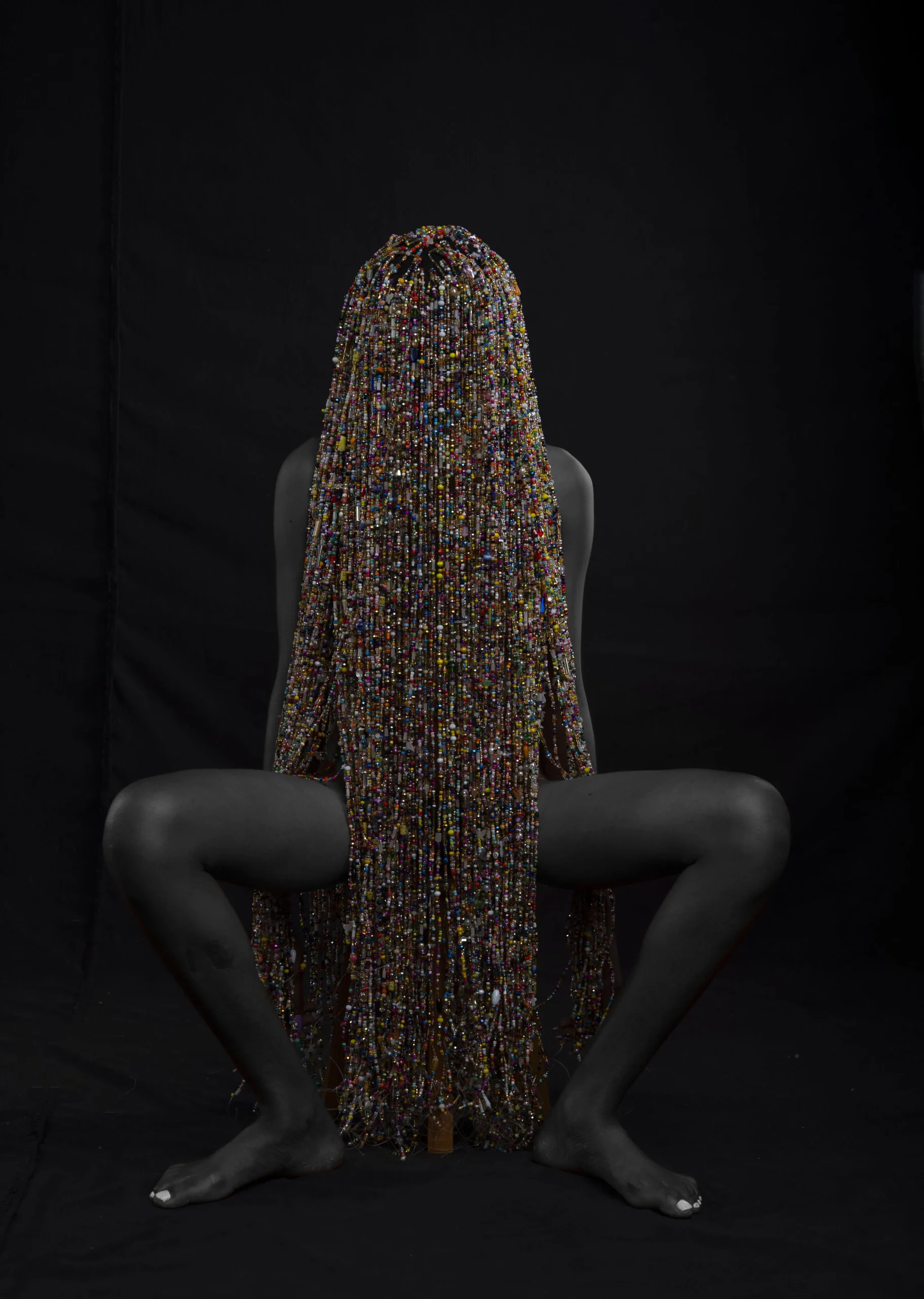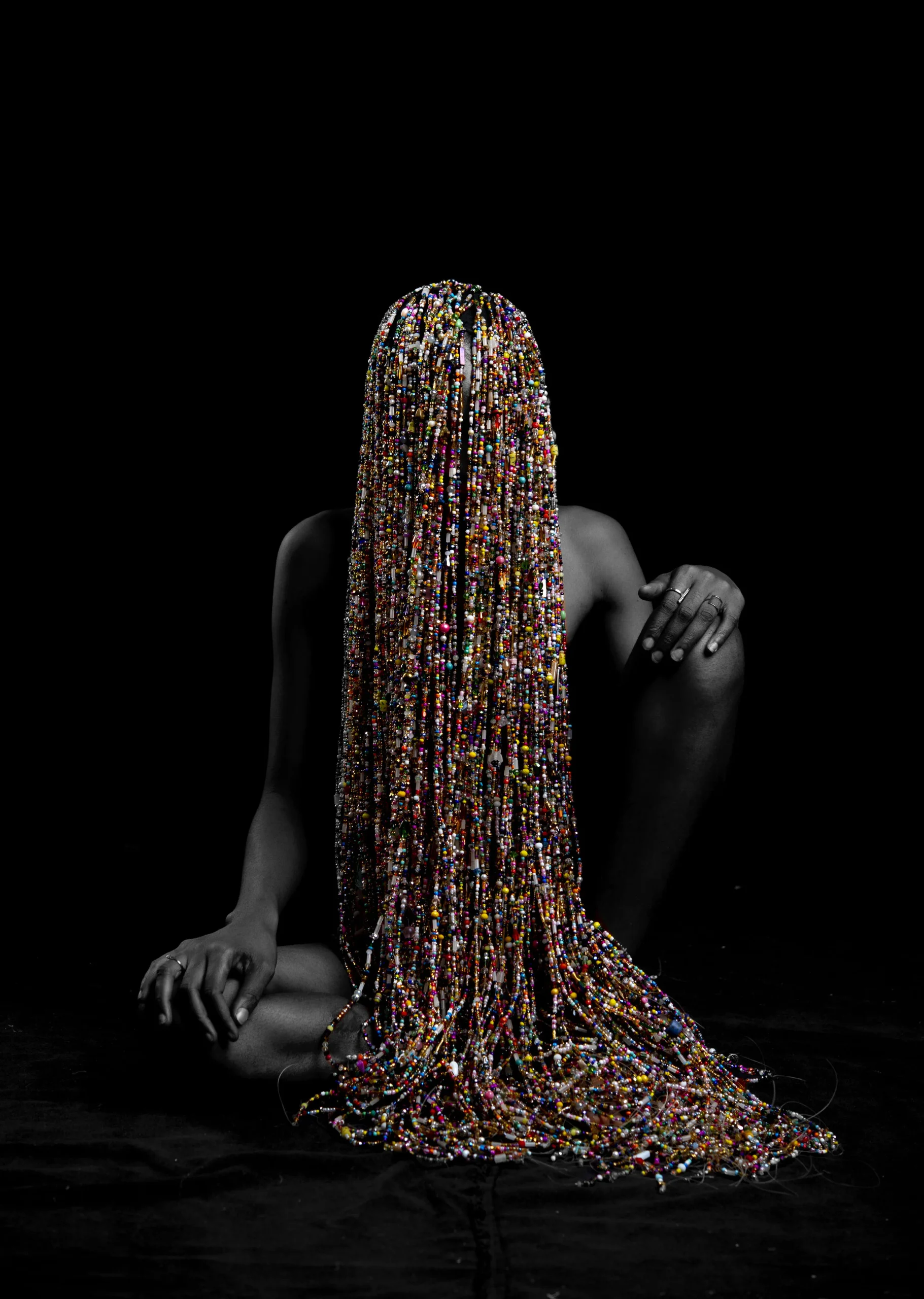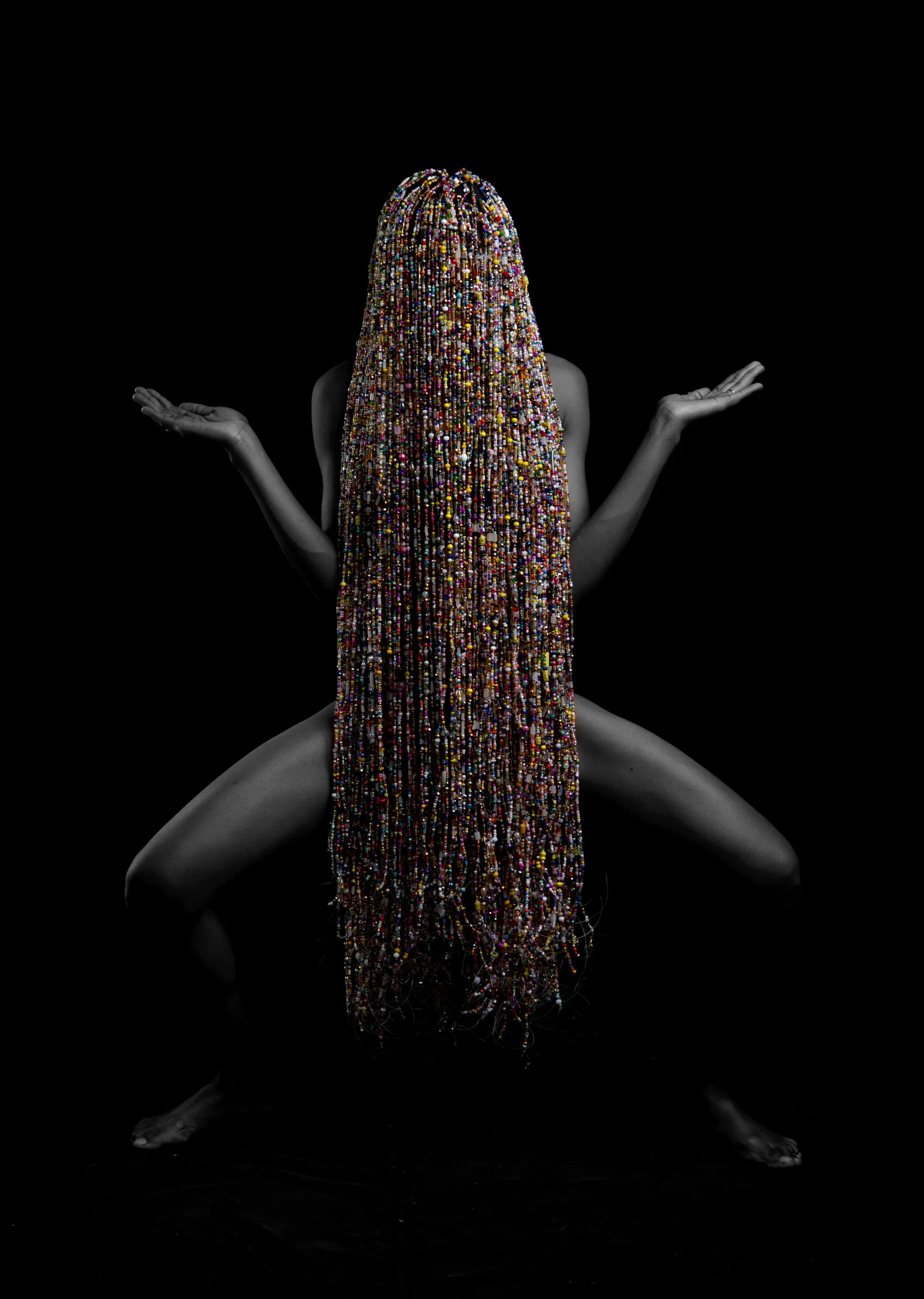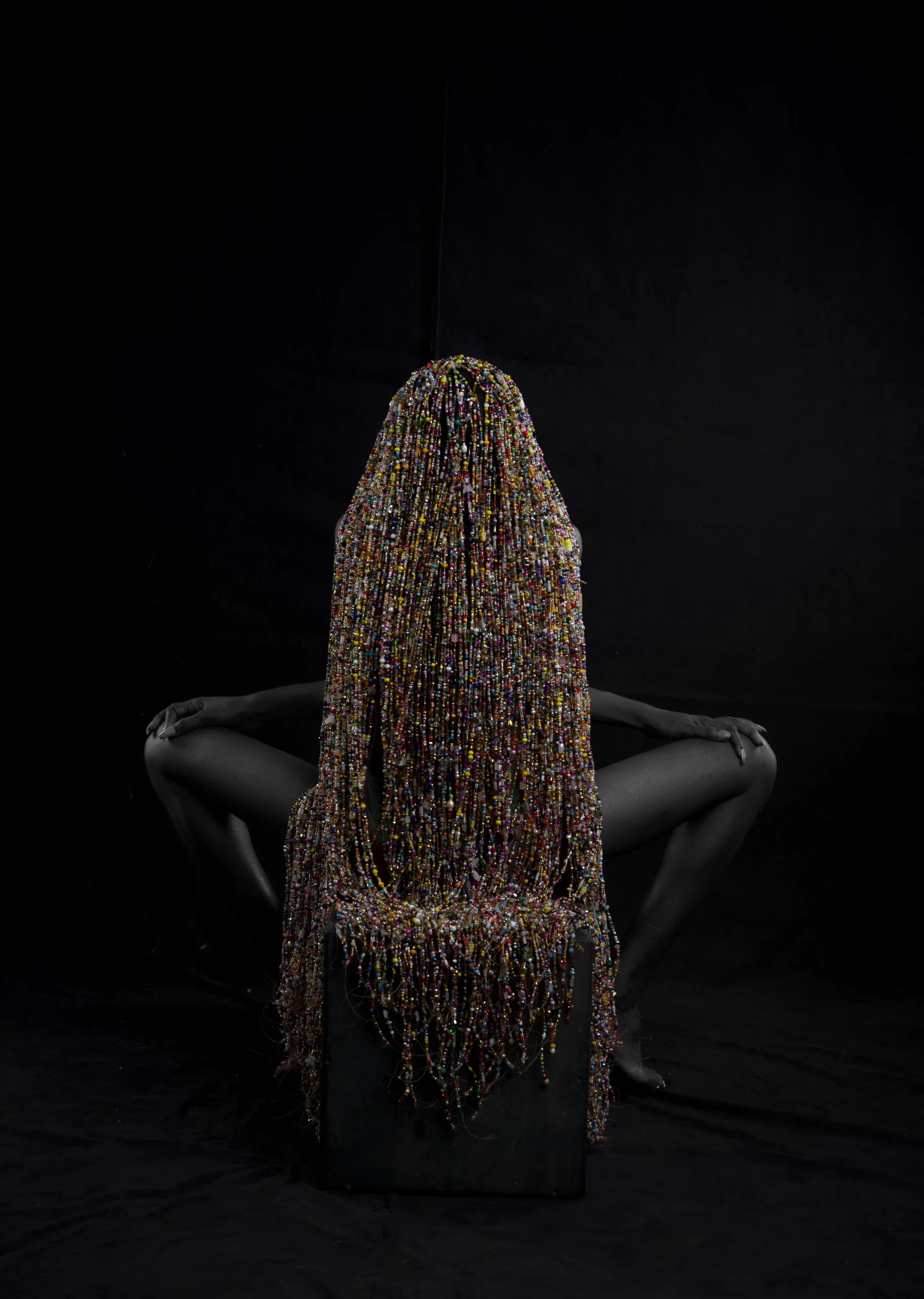
In Beautiful Burden, Vera Obeng uses photography, beads, the veiled body, and staged encounters to examine adornment as a space where beauty, weight, identity, and transformation coexist. Developed through what she describes as an experimental interrogation, the series emerged from a process of testing possibilities—making and unmaking, creating and uncreating, and allowing each encounter between material, body, image, and environment to generate another question.
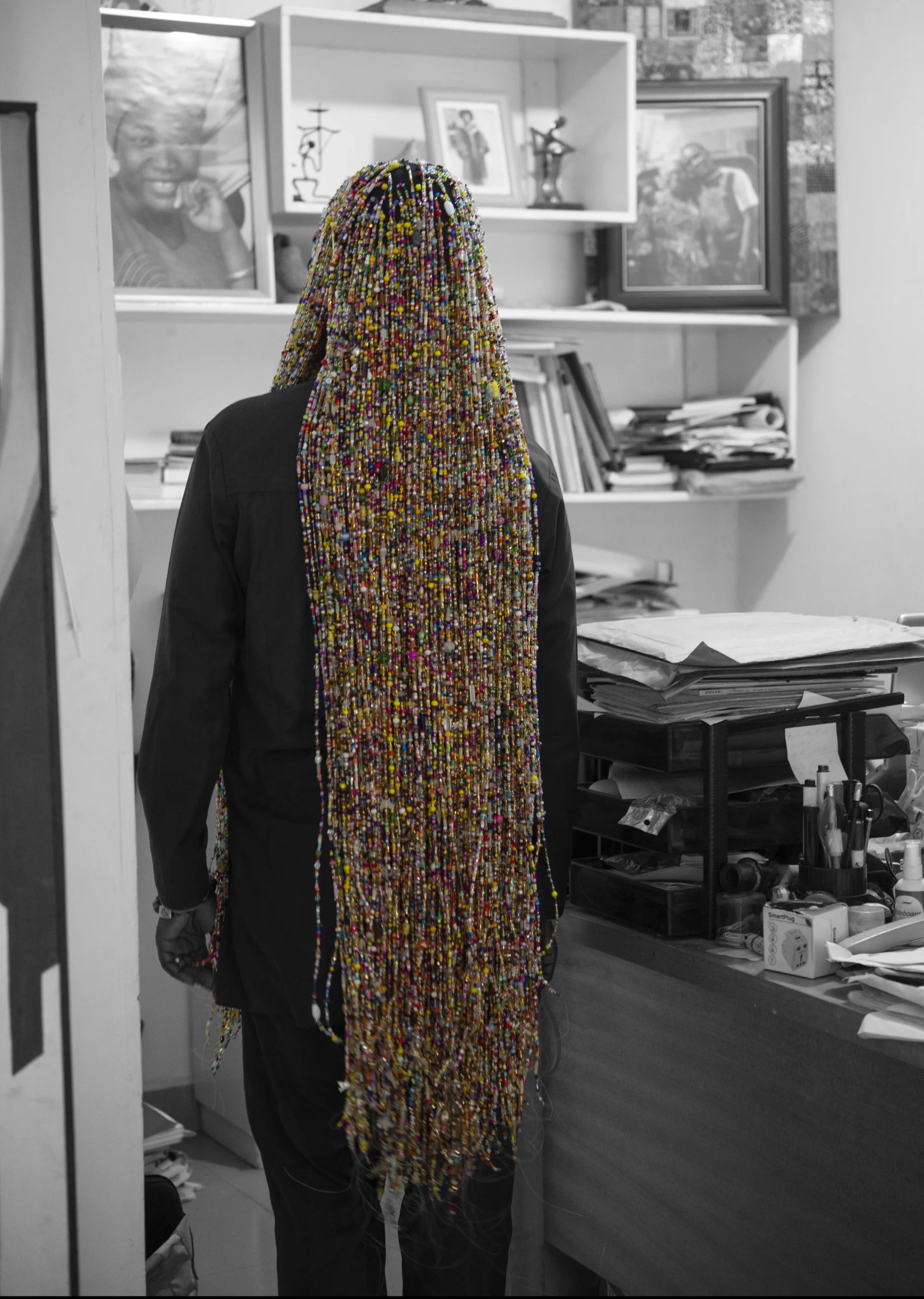
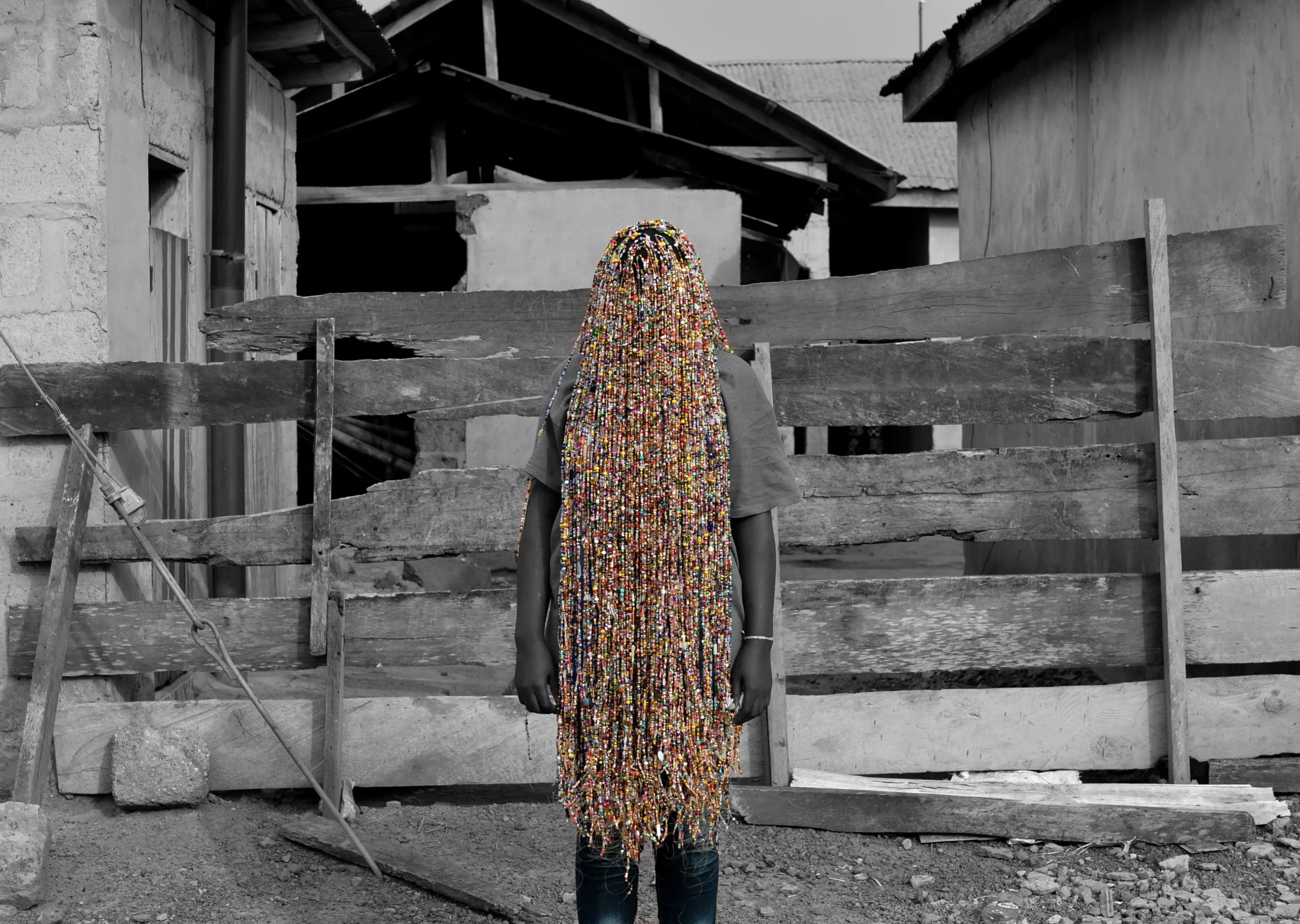
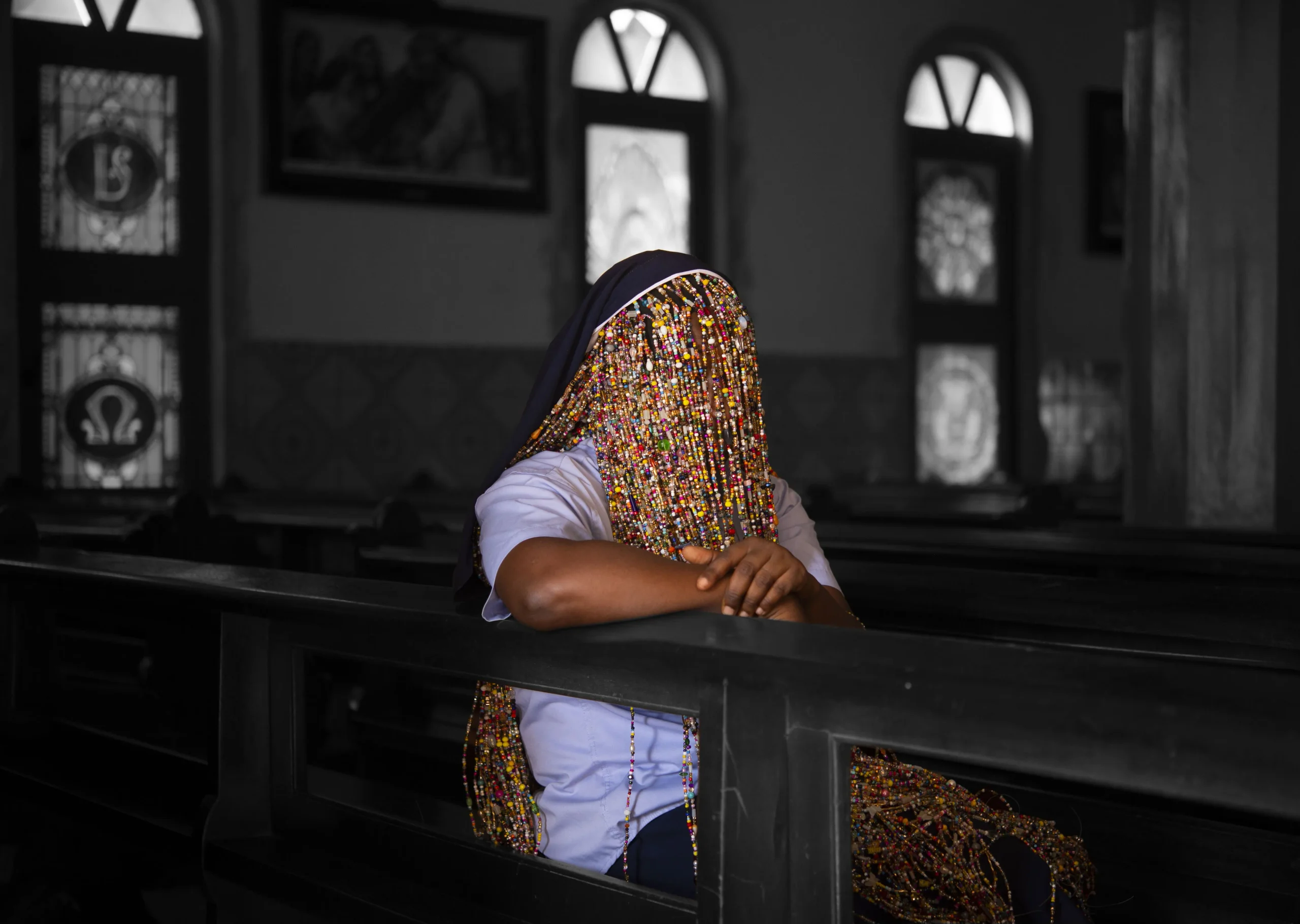
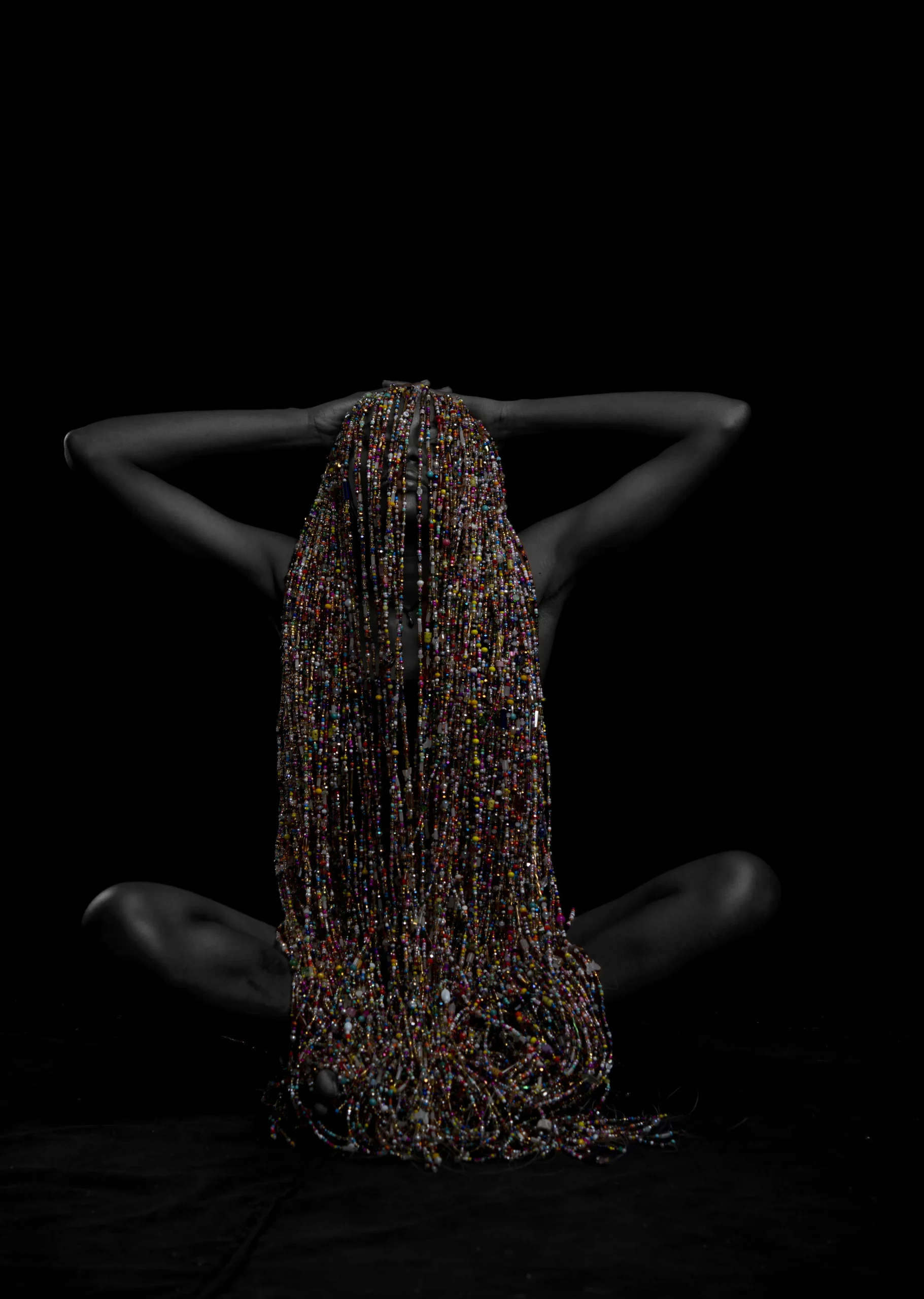
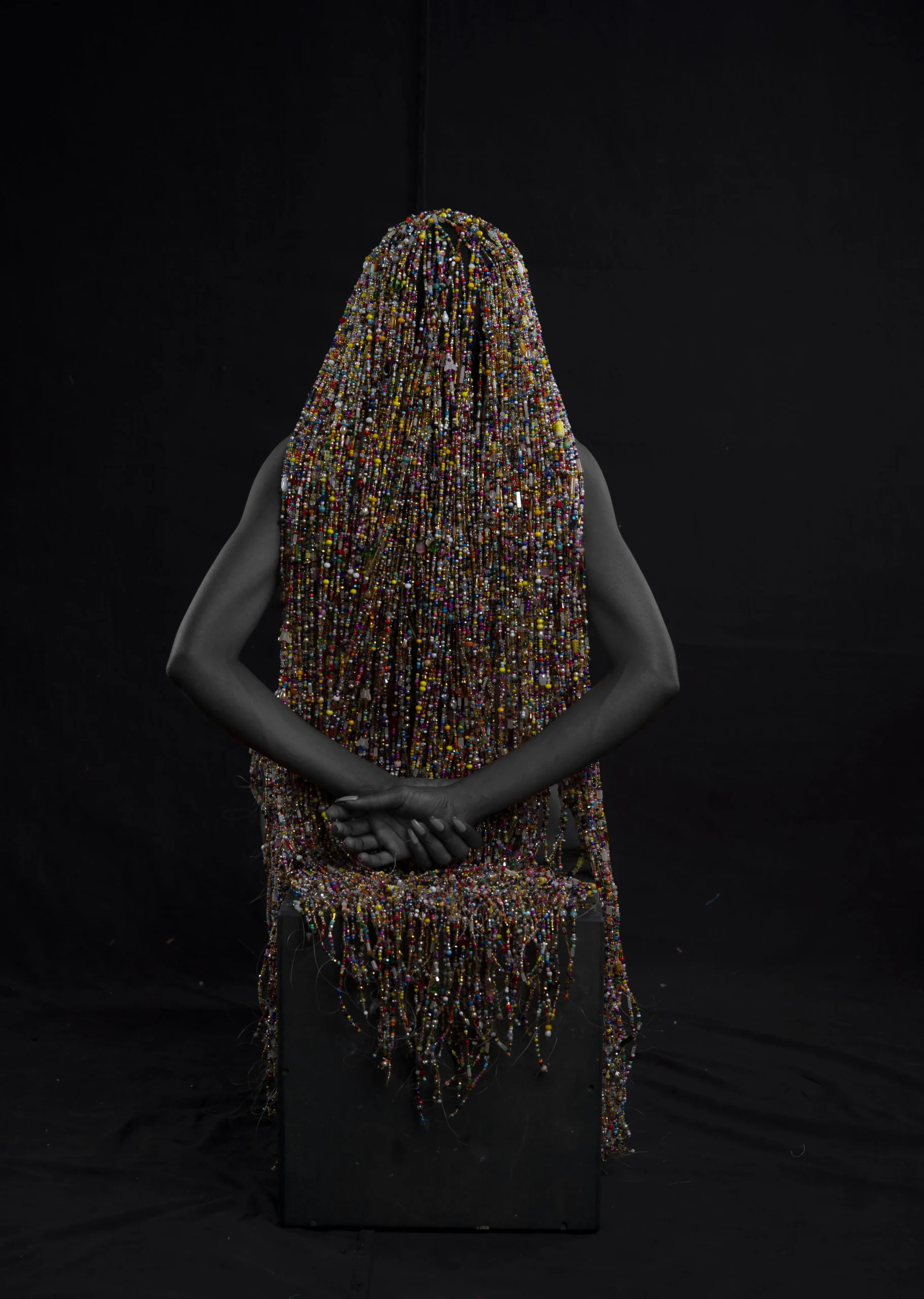
At the centre of the work is an approximately 8kg beaded wig, painstakingly constructed as both an adornment and a sculptural object. Its beauty is inseparable from its physical weight. Once placed on the body, however, the wig begins to behave differently. It takes the shape of its wearer, responding to posture, movement, resistance, stillness, and endurance. What begins as an object worn by the sitter gradually appears to become a collaborator in the portrait, possessing a presence and visual language of its own.
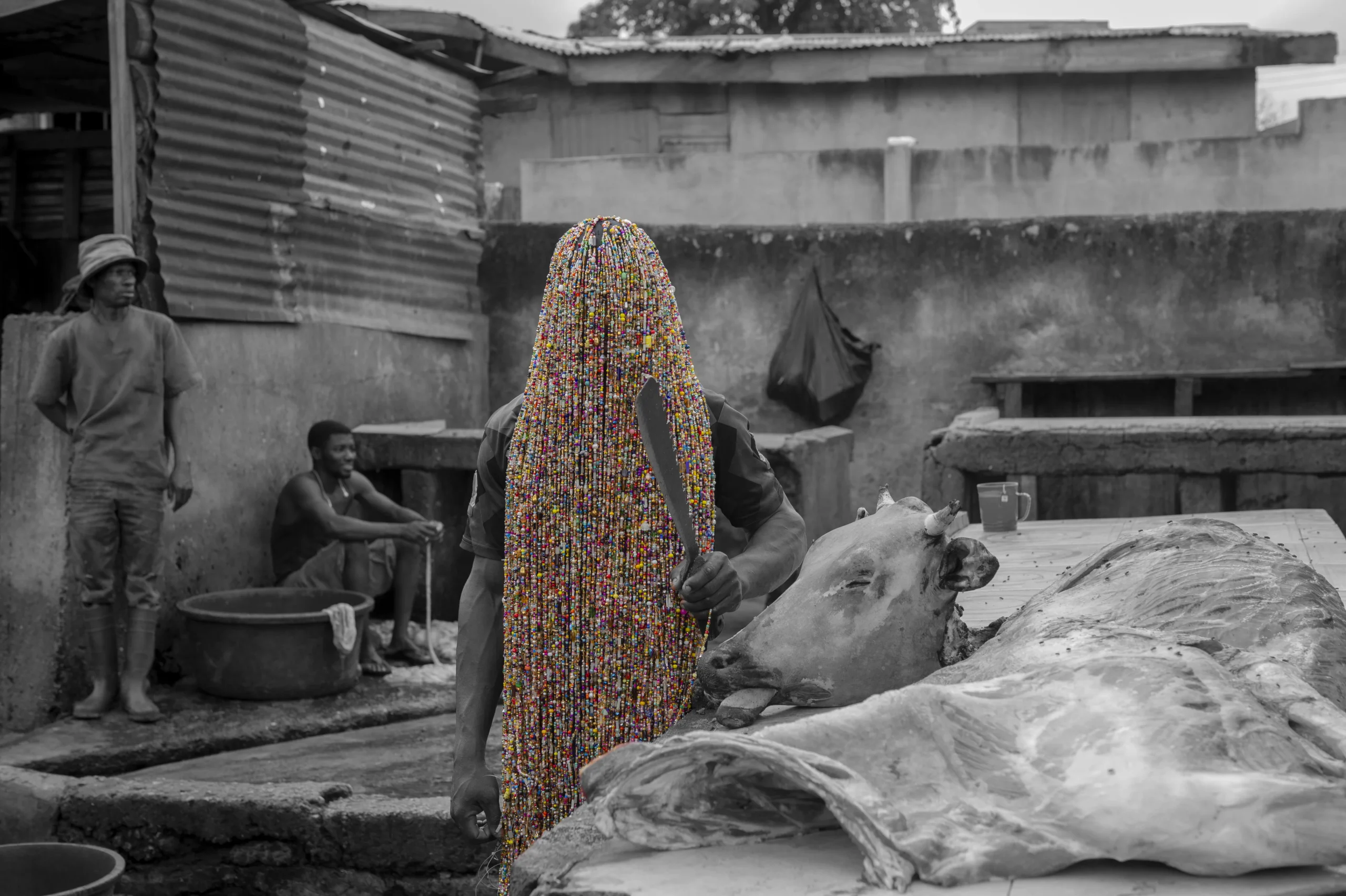
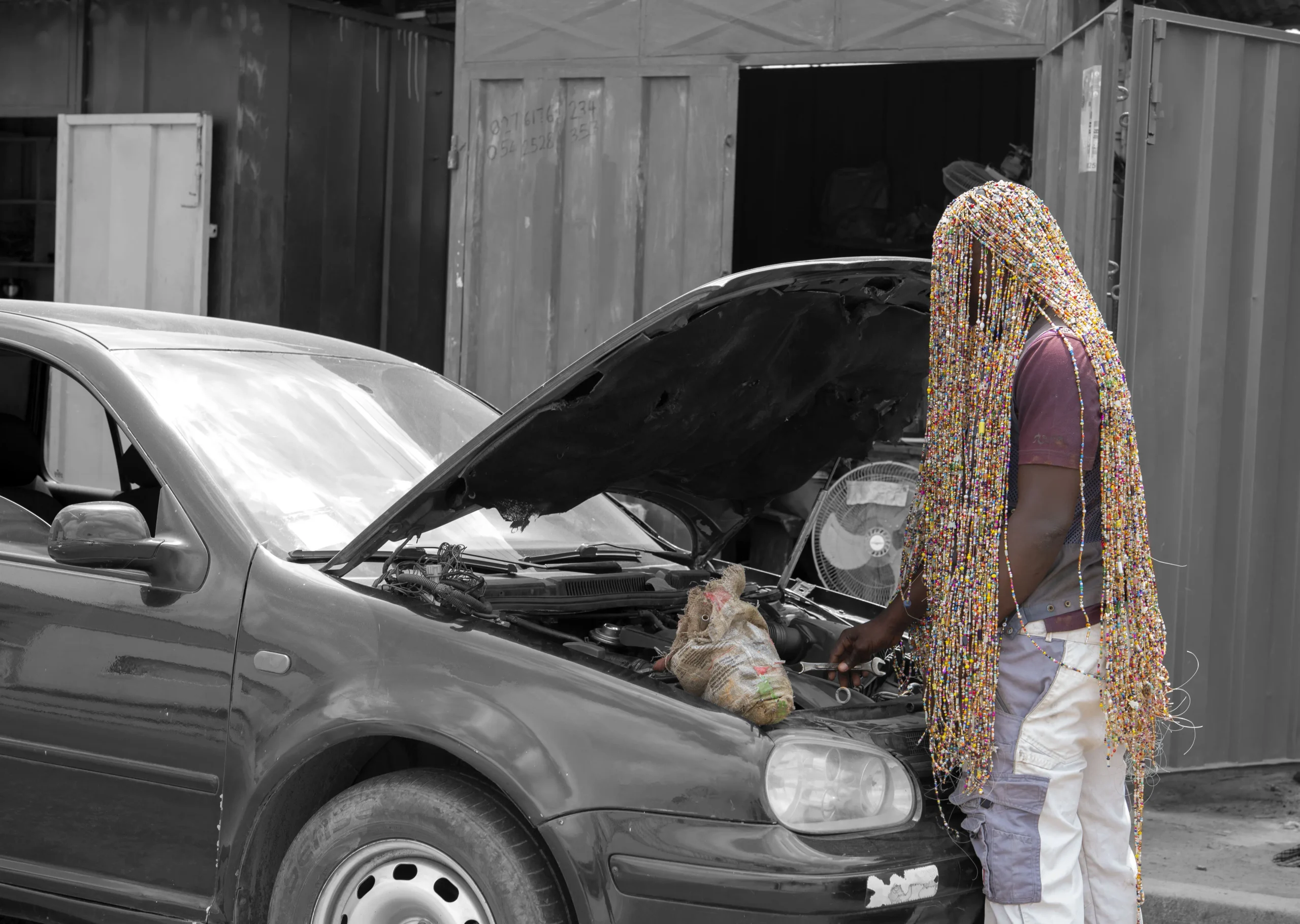
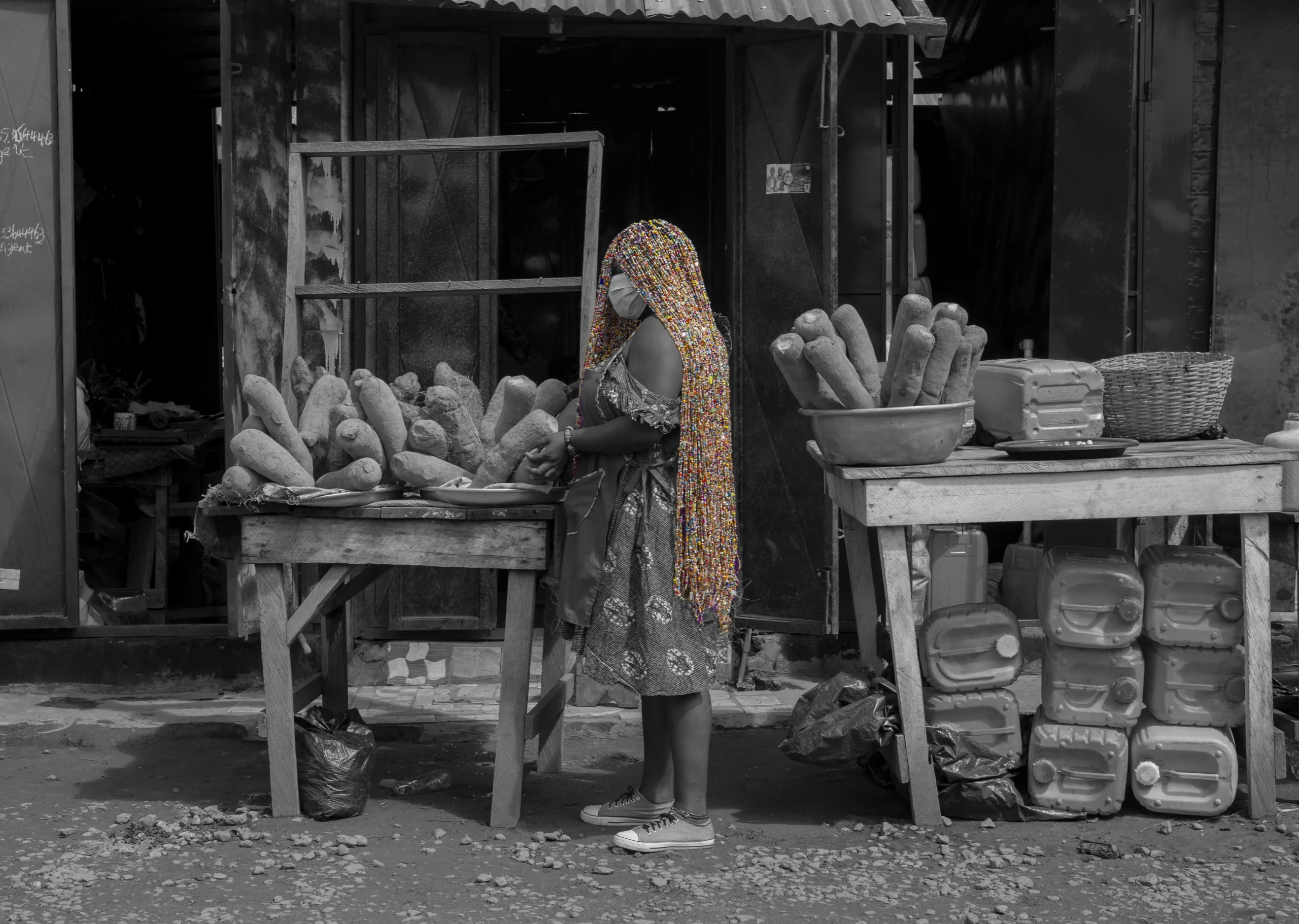
The concealment of the face further complicates the relationship between sitter and object. Individual identity becomes uncertain, while bodily presence remains unmistakable. Across the series, repeated encounters with different sitters raise questions about sameness and difference: Are we encountering different people, or variations of one figure? Where does the body end and the object begin? Can an adornment carry something of the person who wears it? Rather than resolving these questions, Beautiful Burden allows them to remain suspended within the images.
The studio photographs place the beaded figure within deep darkness, allowing the body to appear sculptural, anonymous, and at times almost shrine-like. As the figure moves into churches, markets, workplaces, roadsides, and other lived environments, the work expands beyond the studio into spaces shaped by labour, ritual, survival, community, and memory. These locations do not function merely as backgrounds; they actively alter the meaning of the figure and the burden it carries.
Throughout the series, beads operate simultaneously as hair, veil, colour, excess, concealment, ornament, and weight. Their beauty draws the viewer closer, while their physical heaviness complicates that attraction. This tension between attraction and discomfort becomes central to the work. Beauty is not presented as effortless; it carries demands, expectations, histories, labour, and emotional residue.
Through the relationship between the body and the beaded form, Obeng pushes portraiture beyond facial likeness and toward a more unstable understanding of presence. Beautiful Burden asks what bodies are expected to carry, what beauty may demand of them, and how an object can absorb, transform, and perhaps even speak back to the person who inhabits it. Ultimately, the work exists within the tension of its title: something may be beautiful and burdensome at the same time. Rather than separating these conditions, Obeng allows them to occupy the same body, creating a portrait of beauty not as a fixed ideal, but as an experience shaped by weight, endurance, transformation, and the complicated histories we carry.